In 1885, a three-wheeled contraption with a single-cylinder engine topped out at around 10 mph and drew crowds simply for moving under its own power. In 2026, a car can drive itself on a mapped highway, learn its owner’s habits, and receive a software update overnight that makes it measurably more efficient than it was the day before. The distance between those two machines isn’t just mechanical — it’s a story about what a car was even understood to be, rewritten roughly every generation.
This isn’t a nostalgia piece. It’s a look at the handful of genuine inflection points that took the automobile from a mechanical novelty to a connected, software-defined extension of daily life — and what that arc suggests about where it’s actually headed next.
1885-1908: The Automobile as Luxury Curiosity
The car’s origin point is well established: German engineer Karl Benz built the Benz Patent-Motorwagen in 1885, a three-wheeled vehicle powered by an internal combustion engine running on liquid petroleum gas, with a tubular steel frame and electric ignition. It’s widely considered the first true automobile, and Benz applied for a patent for what Mercedes-Benz today calls the vehicle that kicked off an entire transportation revolution.
What followed wasn’t immediate mass adoption — it was two decades of automobiles as expensive, custom-built luxury items, unaffordable and largely impractical for most people. The first gasoline car built in the United States came from the Duryea brothers in 1893, and Oldsmobile became the first mass-produced car in the US in 1901 — genuine milestones, but ones that still left car ownership as a wealthy person’s novelty rather than a mainstream reality. Before 1900, most people spent their entire lives within a few miles of where they were born; the automobile hadn’t yet broken that pattern.
The electric car’s first, largely forgotten era
It’s a detail most casual automotive history skips entirely: electric vehicles weren’t a 21st-century invention layered onto a century of gasoline dominance — they were genuine early competitors. Ferdinand Porsche, founder of the sports car company that still bears his name, developed an electric car called the P1 in 1898, and around the same period created the world’s first hybrid electric vehicle, combining electricity and a gas engine. Electric vehicles proved to be the preferred choice in many early urban areas, where roads were well-developed and electricity was more accessible than gasoline. Even Thomas Edison, who considered electric vehicles the superior technology, partnered with his friend Henry Ford in 1914 to explore building an affordable electric car.
1908-1920s: Mass Production Turns the Car Into a Mainstream Object
Everything changed with a single vehicle. Henry Ford’s Model T, introduced in 1908, made gasoline-powered cars widely available and affordable for the first time, and his implementation of moving assembly line production in 1913 drastically reduced manufacturing costs. That combination — a genuinely useful product paired with a genuinely disruptive production method — is what actually democratized car ownership, not the car itself in isolation. The assembly line Ford pioneered would go on to become the blueprint for the entire industry, its logic echoed today in the mass production of everything from sneakers to smartphones.
The consequence for the electric vehicle’s early promise was direct and, in hindsight, somewhat ironic: Ford’s affordable, mass-produced Model T dealt the decisive blow to the first wave of electric cars, whose higher costs and slower production methods couldn’t compete once gasoline vehicles became genuinely affordable for ordinary buyers. Expanding roads, fueling infrastructure, and the sheer economics of mass production all compounded to push electric vehicles into obscurity for the better part of a century.
The 1920s then brought a wave of refinements that made cars genuinely easier to live with day to day: electric starters replaced the hand crank that had made starting a car both physically demanding and mildly dangerous, marking the beginning of the automobile shifting from a mechanical challenge to operate into something closer to an appliance.
1930s-1950s: Wartime Production and the Birth of Car Culture
The automobile’s industrial capacity became a matter of national significance during World War II, when Detroit’s automakers converted their factories into what became known as “arsenals of democracy,” producing jeeps, tanks, fighter planes, and other materiel that helped secure the Allied victory. That wartime manufacturing surge left the American auto industry with production capacity and expertise that would define the following decades.
After the war, highways began expanding across the country and eventually the globe, and that infrastructure gave birth to entirely new patterns of American life: suburbia, the Interstate highway system, the road trip as a cultural institution, and the drive-in as a social space. The car had stopped being simply a mode of transportation and had become the physical infrastructure underneath an entire way of living.
1970s: A Manufacturing Philosophy Arrives From Japan
The next fundamental shift in how cars were built came not from a new technology but from a new philosophy. In the 1970s, Toyota introduced “just in time” production, or JIT, established by Taiichi Ohno, who became known as the father of the system. JIT was as much a philosophy as a production model, built around reducing waste at every level — eliminating production defects, using materials more efficiently, and cutting down the time spent waiting or transporting goods between stages of production.
JIT’s arrival marked a genuine changing of the guard in automotive manufacturing leadership: Ford’s assembly line had been the industry blueprint for over half a century, and Toyota’s approach represented the next significant wave of change, one that would go on to influence manufacturing far beyond the automotive sector.
Late 20th Century: All-Steel Bodies, Electronics, and Gradual Refinement
Throughout the remainder of the 20th century, automobile technology advanced steadily rather than through single dramatic leaps: all-steel bodies improved structural safety, hydraulic brakes and power steering made cars meaningfully easier and safer to control, and increasingly sophisticated computerized engine management systems began optimizing performance and efficiency in ways that would have been unrecognizable to Karl Benz or Henry Ford. This was the era where the car quietly became an electronics platform as much as a mechanical one, laying groundwork that wouldn’t become fully visible until decades later.
2000s-2010s: The Electric Vehicle’s Second Act
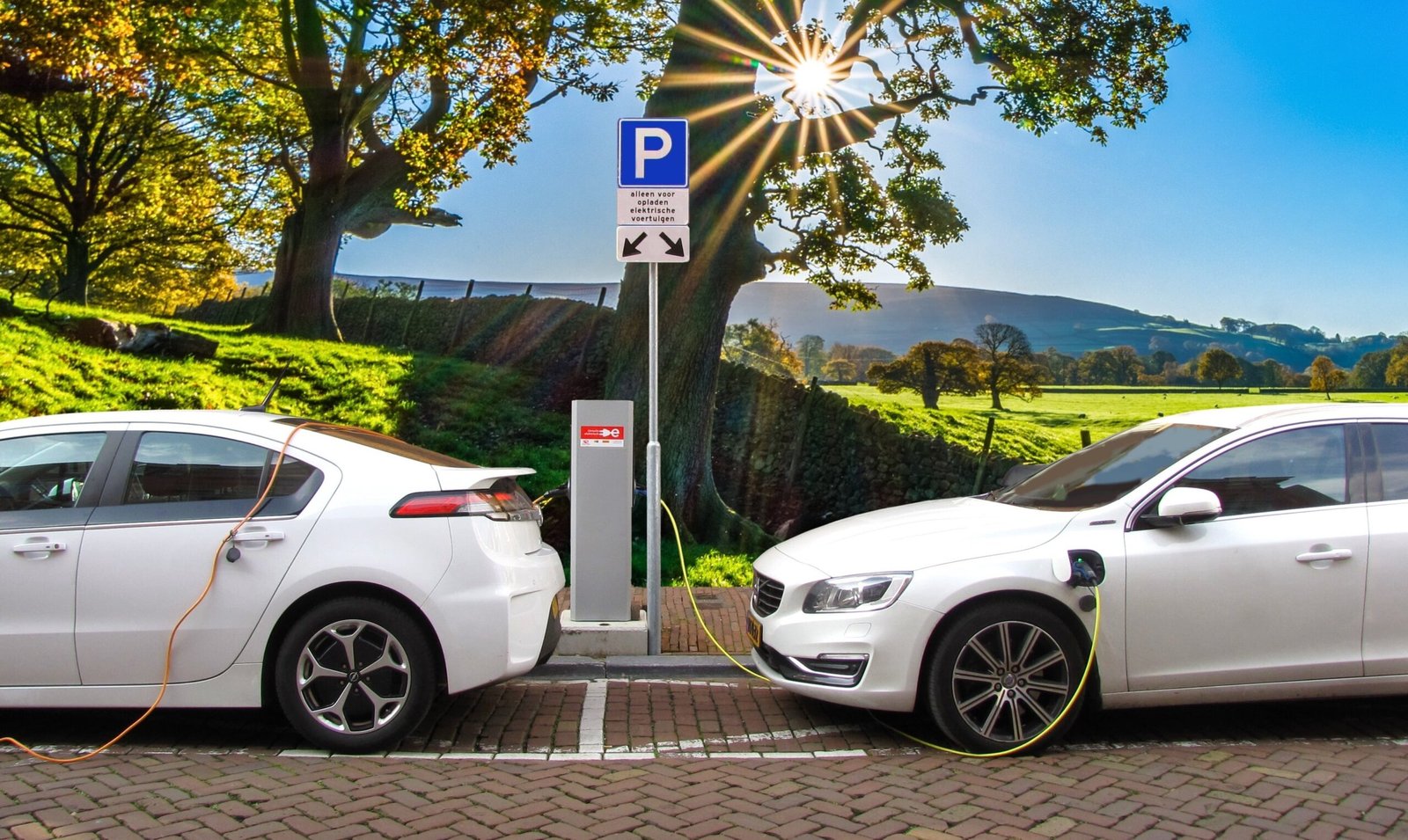
A century after Ford’s Model T pushed the first wave of electric vehicles into obscurity, EVs returned — not as a curiosity, but as a genuine industrial and cultural force. Pioneered in this modern era by companies like Tesla, electric vehicles became increasingly popular due to their lower environmental impact and rapid advancements in battery technology. The historical echo is hard to miss: the same fundamental appeal that drew early-1900s urban drivers to electric cars — quiet, efficient, mechanically simpler operation — became the selling point again once battery technology finally caught up to the promise Porsche and Edison had chased a century earlier.
2020s-2026: The Car Becomes a Connected, Learning System
The current era represents perhaps the most fundamental redefinition since the Model T — not because of a single invention, but because of what the car is now understood to be. Today, nearly every major automobile manufacturer has at least one electric model in its lineup or is actively developing one, but the more structurally significant shift is that automotive technology is now grounded in software-defined vehicles, where core functionality is defined and updated through software rather than being fixed permanently at the factory.
That shift changes the object itself in a way none of the prior eras did. A 1908 Model T was mechanically the same car on the day you sold it as the day you bought it. A 2026 vehicle can genuinely improve after purchase, through over-the-air updates that refine everything from battery management to driver assistance systems, learning and adapting in a way that would have been conceptually impossible for any of the automobile’s previous 140 years.
What the Pattern Across 140 Years Actually Shows
Looking at the full arc, the automobile’s history isn’t really a story of one continuous line of progress — it’s a story of the car being redefined roughly once per generation, each time by whichever force was most disruptive at that moment: Benz’s engine made self-powered movement possible at all; Ford’s assembly line made it affordable; postwar highways made it the backbone of daily life; Japanese manufacturing philosophy made it efficient at global scale; and software has now made it a platform that keeps changing after it’s built.
- 1885-1908: proof of concept — the automobile exists, but only for the wealthy.
- 1908-1920s: mass production — the automobile becomes affordable and mainstream.
- 1930s-1950s: infrastructure — the automobile reshapes how and where people actually live.
- 1970s: manufacturing philosophy — the automobile industry itself gets rebuilt around efficiency.
- 2000s-2010s: electrification’s return — the automobile confronts its environmental footprint directly.
- 2020s-2026: software and connectivity — the automobile becomes a system that learns and updates.
Frequently Asked Questions
Who actually invented the first car?
German engineer Karl Benz is widely credited with building the first true automobile, the Benz Patent-Motorwagen, in 1885 — a three-wheeled vehicle powered by an internal combustion engine, with a tubular steel frame and electric ignition, that reached speeds up to roughly 10 mph.
Were electric cars really popular before gasoline cars took over?
Yes, genuinely so in certain markets. In the late 1890s and early 1900s, electric vehicles were often the preferred choice in urban areas with well-developed roads and accessible electricity, and innovators including Ferdinand Porsche and Thomas Edison actively worked to advance electric vehicle technology before Ford’s mass-produced, affordable Model T made gasoline cars the dominant choice.
Why was the Ford Model T such a turning point in automotive history?
Because it combined an affordable product with a genuinely disruptive production method. Ford’s 1908 Model T made gasoline cars widely available, and his 1913 introduction of the moving assembly line drastically cut manufacturing costs, together transforming the automobile from a wealthy person’s luxury item into mainstream personal transportation.
What was “just in time” manufacturing and why did it matter for cars?
Just in time, or JIT, was a production philosophy introduced by Toyota in the 1970s, developed by Taiichi Ohno, focused on reducing waste throughout the manufacturing process. It represented the first major shift in automotive manufacturing leadership since Ford’s assembly line, and its waste-reduction principles went on to influence manufacturing well beyond the auto industry.
Is the shift to software-defined, electric vehicles today really comparable to earlier automotive turning points?
In terms of scale of redefinition, yes. Just as Ford’s assembly line redefined what a car could cost and Ohno’s JIT redefined how cars were built, today’s shift toward software-defined vehicles redefines what a car actually is — a product that can genuinely improve after purchase through updates, rather than remaining mechanically fixed for its entire ownership life.
The Bottom Line
The automobile’s 140-year journey isn’t really the story of one invention getting steadily better — it’s the story of the same basic idea, four wheels and an engine, being completely reinvented every few decades by whatever force was reshaping the world around it at the time. Benz proved it could move. Ford made it affordable. Postwar highways made it the shape of daily life. Toyota made building it efficient at global scale. And today, software is making it something that keeps changing long after it leaves the factory floor. The car has never really been a finished object — it’s been a running conversation between engineering and the moment it existed in, and 2026’s version is simply the latest word in that conversation, not the last one.